1. Bund, unions des travailleurs juifs – Jewish workers’ union
by Aleksander Edelman and Benjamin Hausser, in collaboration with Constance Pâris de Bollardière, historian.
documentary
– searching for producers and distributors. If you are interested, please contact.Synopsis english version
Synopsis
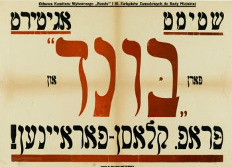
In the 21st century, intolerance and violence continue to rise, echoing the dark legacies of the 20th century—marked by genocide, unchecked capitalism, and the relentless exploitation of the weak. Against this backdrop, we revisit the story of a movement that once offered hope for a more just and humane society.
Founded in 1897, the Bund was a political party that championed the rights of the Jewish working class in Eastern Europe, a group often scapegoated and oppressed. It envisioned a world of tolerance, solidarity, and cultural coexistence, fighting for the most vulnerable in an era of mounting injustice. The Bund’s struggle persisted until its tragic end during the Holocaust, when its people perished in the gas chambers and burning buildings of Nazi-occupied Warsaw.
This is the story of the Bund—a movement that once inspired hope, now revived as a reminder for future generations.
french version
Synopsis
Au XXIe siècle, l’intolérance et la violence continuent de croître, faisant écho aux sombres héritages du XXe siècle — marqué par les génocides, l’explosion du capitalisme et l’exploitation incessante des plus faibles. Dans ce contexte, nous souhaitons raviver la mémoire d’un mouvement qui avait su incarner l’espoir d’une société plus juste et humaine.
Fondé en 1897, le Bund était un parti politique qui défendait les droits des classes populaires juives d’Europe orientale, souvent accusées à tort et opprimées. Il rêvait d’un monde de tolérance, de solidarité et de coexistence culturelle, et s’est battu pour les plus vulnérables dans une époque marquée par l’injustice. La lutte du Bund prit fin tragiquement lors de la Shoah, quand ses membres périrent dans les chambres à gaz et les immeubles en flammes allumés par les nazis durant l’insurrection de Varsovie.
C’est l’histoire du Bund — un mouvement porteur d’espoir, que nous souhaitons rappeler aux générations d’aujourd’hui.
2. Nobody cares by Aleksander Edelman
cartoon and fiction;
The history of the Bund, Jewish workers’ union, told through the stories of the families of Marek Edelman and Alina Margolis-Edelman, the last commander of the Warsaw getto uprising and his wife, in the Warsaw ghetto uprising. Family saga.
– searching for producers and distributors. If you are interested, please contact.
3. Zofia Lipecka, shadow of Shoah by Anne Agranat and Aleksander Edelman, 2025, in production, searching for distributors.
After the first documentary about the polish artist, Zofia Lipecka, surface depth, showing the role of signs and symbols in her paintings since circa 1980, the second film is dedicated to her art in the context of Shoah and memory of extermination of Jews during the World War 2.
4. Néo-Débord by Aleksander Edelman
fiction inspired by Guy Débord In Girum Imus Nocte Et Consumimur Igni (1978)
searching for producers and distributors. If you are interested, please contact.

5. Rovars revolt by Mario Ollero and Aleksander Edelman
Science fiction, serial.
Pitch
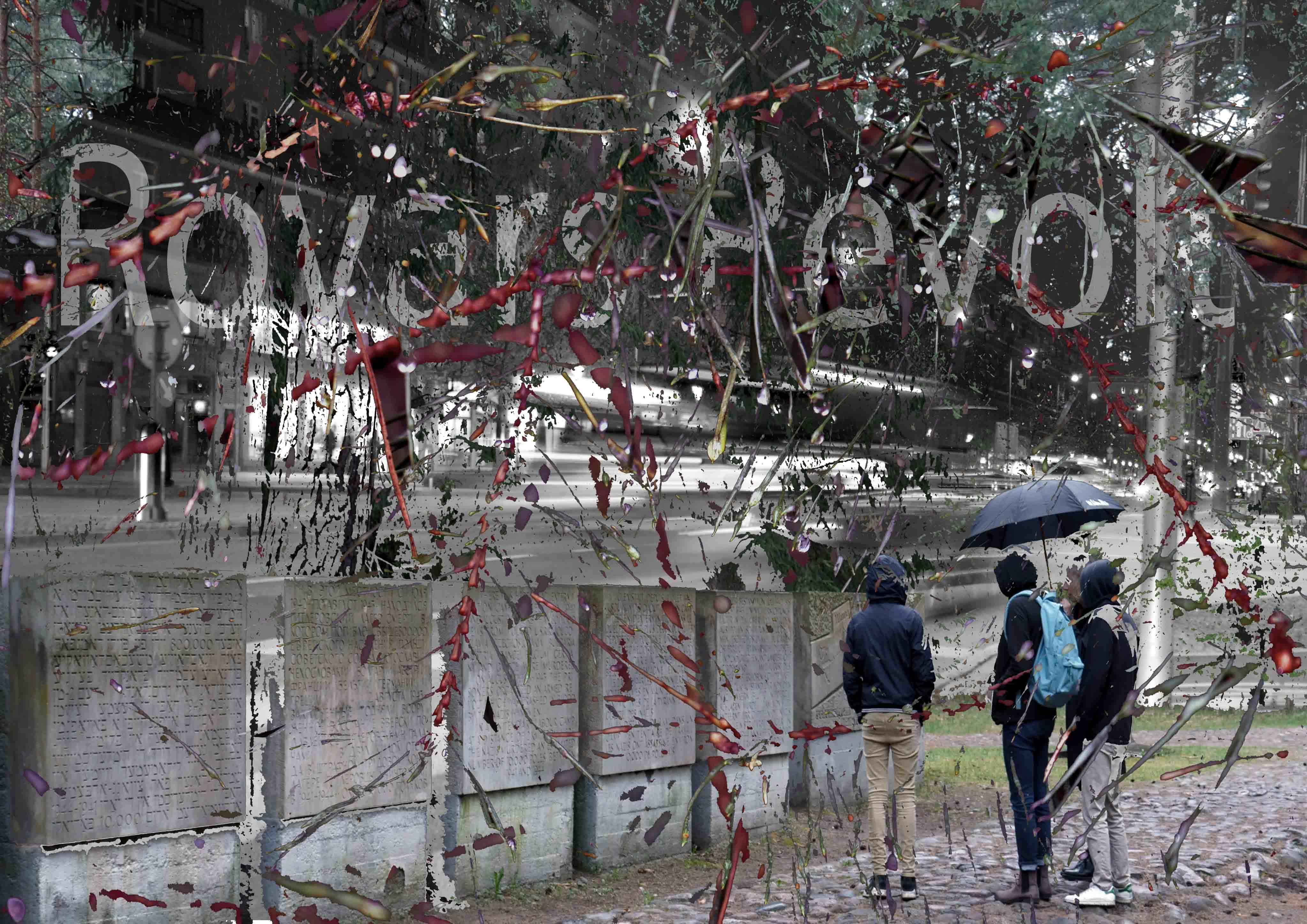
The mini-series “Rovars revolt” combines a futuristic dystopia and an old forgotten utopia, which could never be realized. This is the utopia of BUND – Jewish labour party disappeared during the Holocaust in Poland, transposed to a future struggle between men and their own creation.
Synopsis
Artificial intelligence is omnipresent. History is forbidden in schools. A new group is emerging in the society. It is a group of machines becoming slowly humanized (GEPS). Corrupted politicians dominated by human supremacists govern the society. Humans are losing free will in contact with AI and GEPS. The group of modified humans or “transhumans” (ROVARS, meaning insects in Hungarian) is growing. They are slaves of both, humans and GEPS.
The BUND[1] ideology and history rediscovered by a young student of the history of XXth century, EVEA, is reactivated and adapted by the resistance of a new proletariat of transhumans. Power struggles, resistance to oppression, stories of love and friendship, loyalty and betrayal, violence and poetry, the psychological complexity of characters, whether it concerns humans, trans-humans or post-humans compose the frame of the film.
The action of the film takes place partly in the future, in 2047 in Central Europe and somewhere in America, in a society dominated by artificial intelligence; partly in the past: between 1920 and 1943, in Russia, Lithuania and Poland.
Avoiding Manichaeism, the series attempts to question the ideal of a multicultural society, based on friendship, tolerance and social justice in a world where Humanity is profoundly transformed by technology. It addresses the absence of utopias in the twenty-first century and a desperate search for the meaning of life.
[1] General Jewish Bund in Russia and Poland aimed to unify Jewish workers in the Russian Empire and Poland into united socialist party.